The neck and décolleté are consistently the areas that reveal age most honestly, and the ones most consistently left out of a skincare routine. Most people extend their facial cleanser to the chin and stop there. Serums, treatments, and professional attention are focused almost entirely on the face, while the neck and chest which are just as exposed to sun, gravity, and the effects of time age without any meaningful intervention until the changes become impossible to overlook.
By the time most clients raise the neck and décolleté as a concern, they are dealing with a combination of changes that developed gradually over years: a different texture than the face, horizontal lines that do not respond to hydration, a crepey quality in the skin that was not there a decade earlier, and sometimes a visible mismatch between the condition of the face and the condition of the skin immediately below it. That mismatch is, for many clients, the thing they notice most acutely a well-maintained face sitting above a neck and chest that tell a different story.
At Esthetics Embassy in Pound Ridge, NY, the neck and décolleté are treated as part of a complete skincare strategy, not as an afterthought to facial treatment. This post explains why these areas age the way they do, what is driving the specific texture changes most clients are concerned about, and what professional treatment can realistically accomplish.
Why the Neck and Décolleté Age Differently
The skin on the neck and décolleté shares some characteristics with facial skin but differs in several important structural ways that make it more vulnerable to specific types of aging.
The neck has fewer sebaceous glands than the face, which means it produces less sebum and has a naturally thinner lipid barrier. This makes it more susceptible to dehydration and transepidermal water loss, and less resilient to environmental stress. The décolleté has even fewer sebaceous glands, and the skin there is thinner again.
The neck is also an area of constant movement. The platysma muscle, which runs from the jaw to the collarbone, contracts hundreds of times daily through speaking, swallowing, and turning the head. Over decades, this repeated movement contributes to the horizontal banding that most clients recognize as neck lines, as the skin repeatedly folds in the same places without the collagen density to recover fully between contractions.
Sun exposure on the neck and décolleté tends to be cumulative and largely unprotected. Most people apply facial SPF and forget the neck entirely, or apply it inconsistently. The décolleté is particularly exposed in warmer months and through open necklines, accumulating UV damage that drives the pigmentation, textural changes, and collagen breakdown that present years later as visible aging.
Finally, sleeping position affects these areas in a way that is rarely considered. Side sleepers in particular develop compression creases on the décolleté and lateral neck from hours of nightly pressure, and these lines can become permanent over time as the skin loses its elasticity and capacity to recover.
What Drives Specific Texture Changes
Crepey Skin
The crepey texture that develops on the neck and chest a fine, loose, paper-like quality to the skin is primarily driven by collagen and elastin loss in the dermis combined with a reduction in the skin’s lipid content. As the structural proteins that give the skin its resilience break down with age and UV exposure, the skin loses the capacity to hold its surface taut, and the fine wrinkling of crepey texture results.
Topical hydration provides temporary improvement in the appearance of crepey skin by plumping the surface cells, but it does not address the dermal collagen deficit that is the underlying cause. Meaningful improvement in crepey skin texture requires stimulation of new collagen in the dermis, which topical skincare alone cannot produce.
Horizontal Neck Lines
Horizontal neck lines sometimes called necklace lines develop at the natural flexion points of the neck where the skin folds repeatedly through movement. In younger skin with abundant collagen, these folds recover fully between contractions. As collagen production declines and existing collagen degrades through UV damage and the natural aging process, the lines become more permanently etched into the skin surface.
These lines exist at the surface and in the dermis simultaneously. Surface-level treatment produces modest softening. Meaningful improvement requires both surface renewal and dermal collagen remodeling.
Uneven Tone and Pigmentation
The décolleté in particular is prone to developing an uneven, blotchy pigmentation pattern from cumulative sun exposure. This often presents as a combination of darker spots, areas of redness or vascular visibility, and overall tone irregularity that makes the skin look damaged and aged regardless of its texture. The pigmentation changes reflect both post-inflammatory response to UV damage and the breakdown of the skin’s melanin regulation that occurs with age and extended sun exposure.
Roughened Surface Texture
A rough or coarsened surface texture on the neck and chest, distinct from the crepey quality of deeper collagen loss, reflects surface cell buildup, reduced cellular turnover, and the early-stage damage to the follicular structure in these areas. This is more responsive to surface treatment than the structural texture changes above.
What Surface Treatment Addresses
For the rough surface texture and uneven pigmentation that have a primarily surface-level cause, consistent gentle exfoliation and targeted brightening protocols produce meaningful improvement.
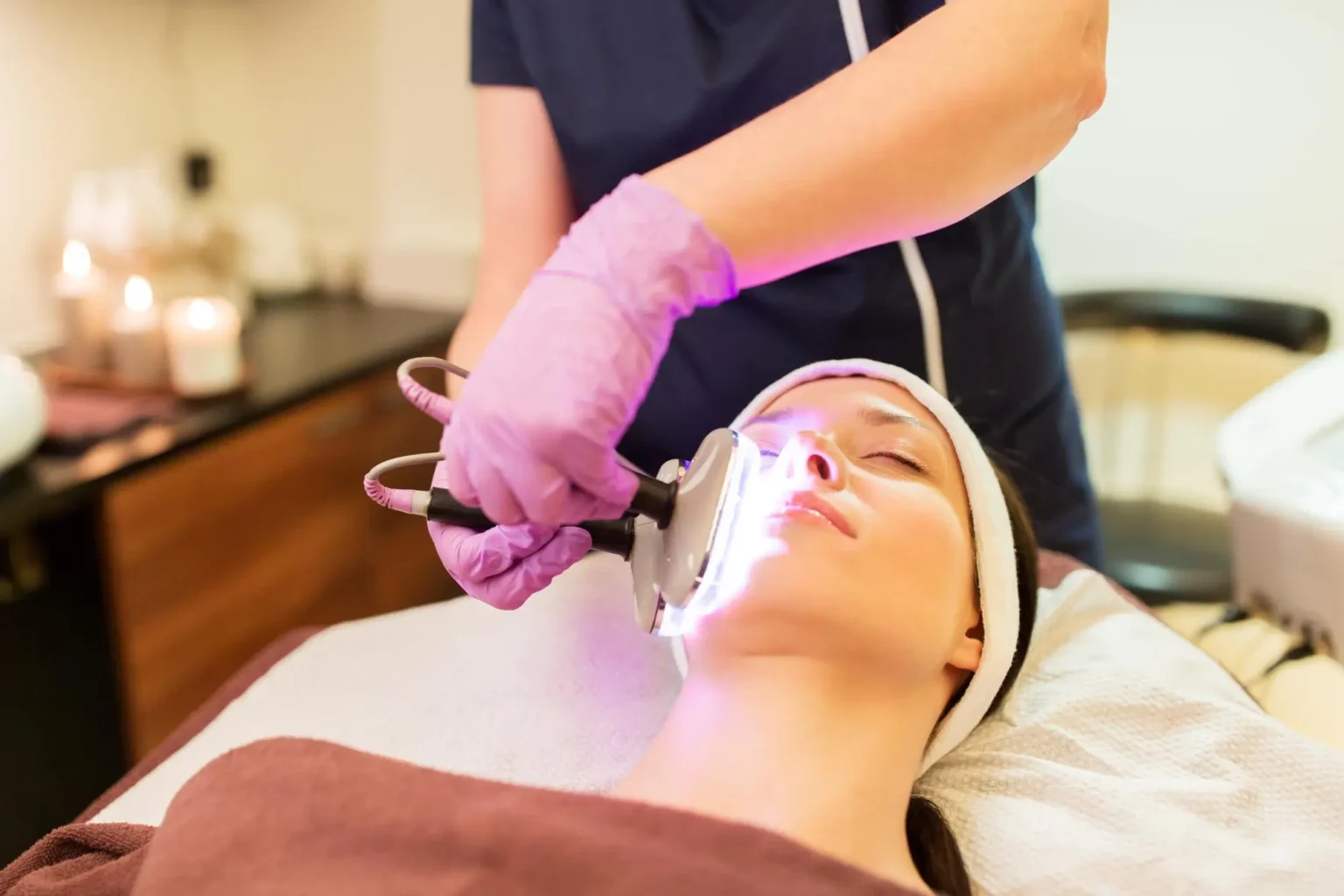
In the professional setting, diamond microdermabrasion extended to the neck and décolleté, as part of a treatment such as the Red Carpet OxyLight Facial at Esthetics Embassy, addresses the surface buildup and uneven cell distribution that contribute to a rough, dull texture in these areas. The oxygen infusion and LED components of the OxyLight protocol also extend to the neck and décolleté in a full-treatment session, supporting circulation and cellular energy in tissue that rarely receives this level of targeted attention.
For post-UV pigmentation on the décolleté, Biologique Recherche brightening protocols applied as part of a professional facial with the appropriate boosters selected for the specific pigmentation presentation produce gradual, progressive evening of tone without the risk of destabilization that more aggressive brightening approaches carry on the thinner, more sensitive skin of the chest.
A consistent home care practice that extends the facial routine to the neck and décolleté including SPF every morning without exception is the single most effective preventive and maintenance measure for these areas.
What Fractional RF Addresses
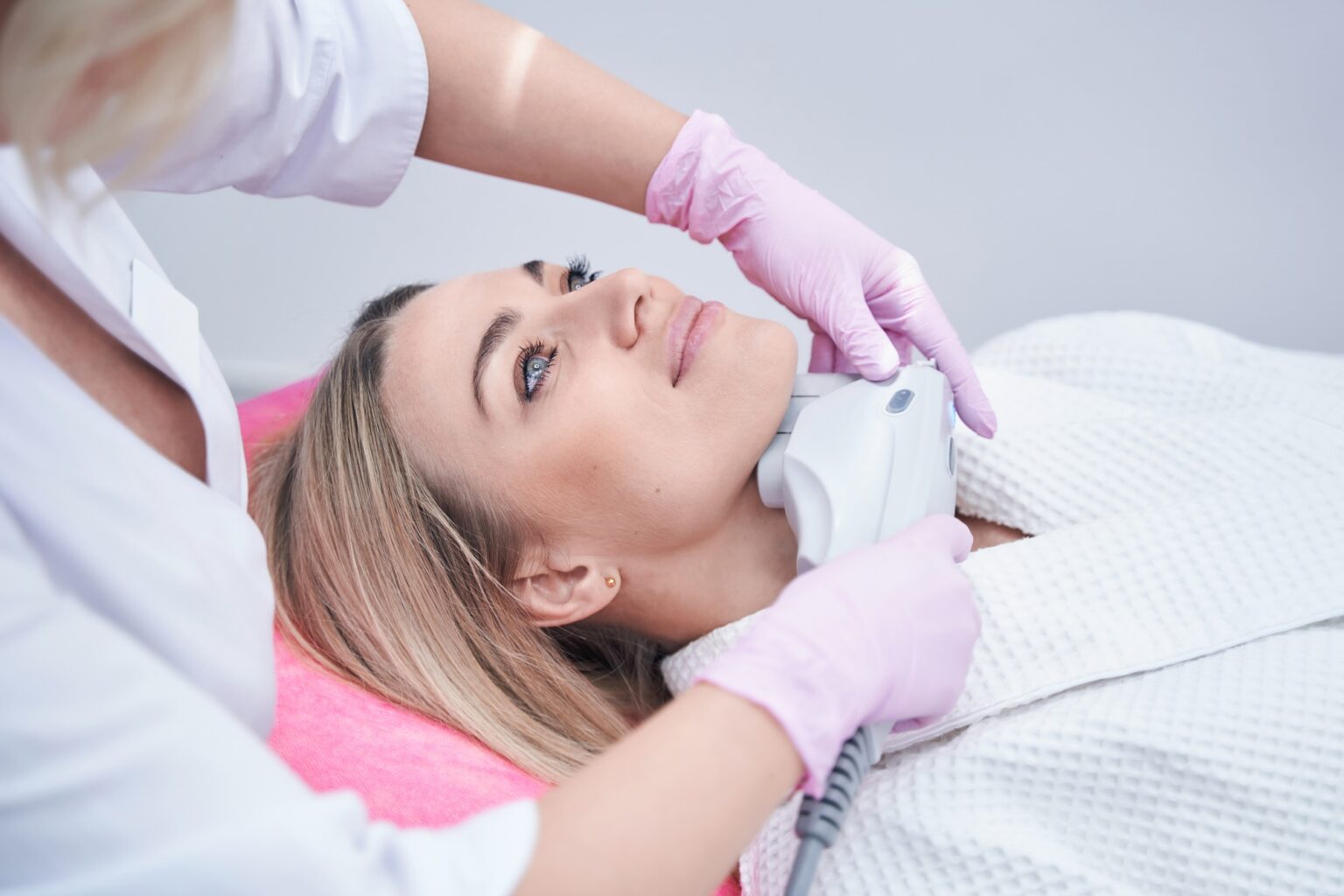
For the structural texture changes on the neck and décolleté crepey skin from collagen loss, horizontal neck lines, and the deeper irregularities that surface treatment cannot reach Venus Viva fractional RF is the most appropriate non-invasive professional treatment available at Esthetics Embassy.
The neck and décolleté are among the treatment zones where Venus Viva performs particularly well because the device’s precision tip can be used safely on the thinner, more delicate skin of these areas in a way that more aggressive resurfacing technologies cannot. The nanofractional tip delivers RF energy at a calibrated depth that stimulates collagen production in the dermis without the surface disruption that would be inappropriate for skin as thin as the neck and chest.
Over a series of Venus Viva sessions targeting the neck and décolleté, clients typically see a progressive reduction in the visible depth of horizontal neck lines as new collagen is built in the dermis beneath them, an improvement in the crepey quality of the skin as collagen and elastin density increases, and an overall refinement of surface texture as the surface renewal component of the treatment encourages healthier, more organized cell production.
The improvement develops over months rather than sessions, as with all collagen remodeling treatments. The results are assessed most accurately three to four months after the final session in a series, when the newly formed collagen has had time to mature and integrate into the existing dermal structure.
What Radiofrequency Skin Tightening Addresses
For clients whose primary concern in the neck area is laxity and loss of definition rather than surface texture, Venus Versa Pro radiofrequency skin tightening addresses the concern at a different level than fractional RF resurfacing.
Venus Versa Pro uses multi-polar radiofrequency and pulsed electromagnetic fields to heat the deeper tissue of the neck and décolleté, stimulating collagen remodeling and elastin production in a way that lifts and firms the overlying skin. Where Venus Viva works closer to the surface to address texture and fine lines, Venus Versa Pro works deeper to address the laxity and loss of structural support that produces the looser, less defined appearance of the neck that becomes more pronounced through the forties and beyond.
For clients presenting with both texture changes and laxity in the neck and décolleté which is common Lydia will recommend a treatment plan that alternates or combines Venus Viva and Venus Versa Pro sessions to address both concerns simultaneously, rather than treating one while leaving the other unaddressed.
Integrating the Neck and Décolleté into a Complete Treatment Plan
One of the most consistent observations Lydia makes in client consultations is that the face and neck are almost never in the same condition when a client has been treating the face with professional attention and the neck without any. The contrast between a well-treated face and an untreated neck becomes more visible over time, and correcting it becomes progressively more involved as the structural changes in the neck deepen.
The most practical approach is to extend professional treatment to the neck and décolleté from the beginning rather than as a corrective measure later. Including the neck and décolleté in the Venus Viva or Venus Versa Pro treatment zones adds meaningful value to the investment already being made in facial resurfacing or tightening, and prevents the divergence in skin condition between the face and the areas below it that most clients eventually want to address.
For clients who are beginning professional treatment for the first time, treating all three zones face, neck, and décolleté as a single treatment area from the outset produces a result that is more coherent and more lasting than correcting the face first and returning to address the neck several years later.
What to Do at Home
Extending the facial skincare routine to the neck and décolleté every morning and evening is the most important change most clients can make to slow the rate of aging in these areas. The products appropriate for the face a BR serum, a hydrating moisturizer, and a broad-spectrum SPF in the morning are generally appropriate for the neck and décolleté as well, applied with upward strokes from the chest to the jaw.
SPF on the décolleté is non-negotiable for any client who wants to prevent further UV-driven texture and pigmentation changes. The sun damage that drives crepey skin and blotchy pigmentation accumulates over decades, and it does not reverse with any of the treatments currently available. Preventing further accumulation is always more effective than attempting correction later.
Lydia will advise on specific BR products for home use on the neck and décolleté based on the Skin Instant® assessment and the primary concerns identified in the consultation.
Begin with a Private Consultation
If the condition of your neck and décolleté is a concern you have been meaning to address, a private consultation at Esthetics Embassy is the appropriate starting point. Lydia will assess the skin in these areas alongside the face, identify which changes are primarily surface-level and which are structural, and recommend a treatment approach that addresses both in the right sequence.
Esthetics Embassy serves clients from Pound Ridge, Katonah, Bedford, Greenwich, New Canaan, Armonk, Chappaqua, and Rye, as well as those traveling from Manhattan and Connecticut.
Esthetics Embassy New York is located at 72 Westchester Avenue, Pound Ridge, NY 10576. Open Monday through Friday, 10am to 7pm, and Saturday, 10am to 3pm.